Showing posts with label Billy Joel. Show all posts

Tuesday, March 31, 2020

March 1980: The Albums We Missed


Billy Joel: You May Be Right


Wanting to rock out in concerts and inspired by punk and new wave music, Billy Joel writes harder edged songs. "This was probably the most fun album that I ever made," Joel says. "It happened fairly quickly. The band loved playing. Audiences loved the material and we were on a roll." The cover features Joel's own house. Glass Houses would top the album charts for four weeks, selling more than 7 million copies.


Genesis : Misunderstanding


The band's breakthrough album, Duke tones down some of the band's far out prog rock tendencies while providing radio programmers with singles like UK#8 "Turn It On Again",UK#48 "Duchess" and US#14 "Misunderstanding", which must have been inspired by the failure of Collins' marriage.  Perhaps the best of the trio era, though not comparable to the Gabriel led albums.


Warren Zevon : Gorilla You're A Desperado


Bad Luck in Dancing School, Zevon's follow-up to Excitable Boy lands flat. His life is pretty much out of control at this point,  but he'd make up for it before the year is out with a powerful live album.


10cc : Welcome to the World


The follow-up to Bloody Tourists and the last 10cc album I ever bought, Look Hear sounds nothing like the band that excited me so much in the mid-70's.  Eric Stewart may have still been recovering from the auto accident that damaged his eyes. Graham Gouldman couldn't carry the rest of the band. Rick Fenn even contributes a pair of songs. Mostly banal, sometimes awful.


Stiff Little Fingers : Nobody's Heroes


Is Nobody's Heroes the last straight punk album? Though they moved out of Belfast, the Irish rockers are still one of the most passionate bands playing. "At the Edge" is a UK#15 hit. The title track would be another single backed with "Tin Soldiers".
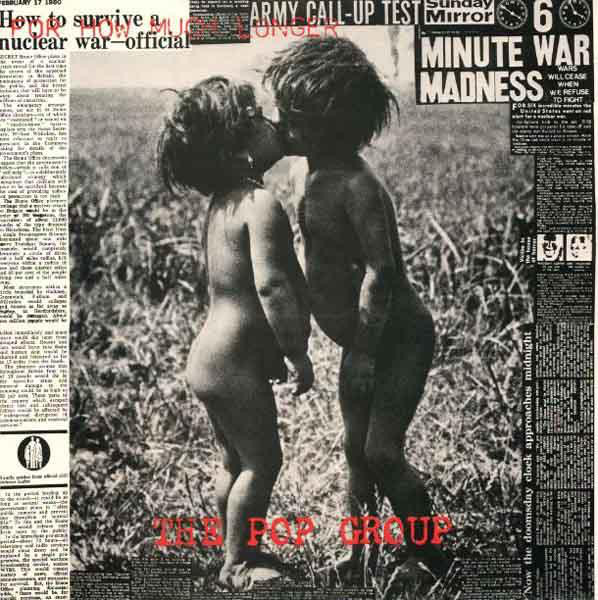


The Pop Group: We Are All Prostitutes


The cover of The Pop Group's How Much Longer Do We Tolerate Mass Murder looks like a newspaper and it is indeed a document of its times, profiling Thatcher's England and the crisis in Northern Ireland. Upon the re-release of this risky, funky, jolting album Mark Stewart told Fact.com “Our stance is shared across the globe,” says Mark Stewart. “I just feel that millions are asking the same question. What gives the one per cent the right to disrupt, exploit and take vast amounts of cash from the chaos and smokescreens they create? Now in this time of proxy wars and false flag attacks, now more than ever I say, for how much longer do we tolerate mass murder?”


Sunday, October 14, 2018

Union Wages, Wedding Clothes


Billy Joel : Rosalinda's Eyes


In October of 1978 Billy Joel released 52nd Street, his follow-up to The Stranger. Within three weeks, it would do something The Stranger never did : top the Billboard album charts on its way to selling more than 7 million albums in the US and winning a Grammy for album of the year. Yes, I bought it too. I was 14. But these days I only listen to 52nd Street for "Rosalinda's Eyes", which made such a memorable appearance on an episode of "Freaks and Geeks". Rolling Stone ranks 52nd Street as the 352nd greatest rock album of all time, which means almost nothing to me.


Stephen Holden reviewed the album for Rolling Stone :

On 52nd Street and The Stranger, Billy Joel is the quintessential post-rock entertainer: a vaudevillian piano man and mimic who, having come of age in the late Sixties, has the grasp of rock and the technical know-how to be able to caricature both Bob Dylan and the Beatles as well as "do" an updated Anthony Newley, all in the same Las Vegas format. Joel seems to have been born knowing what many Seventies pop stars have had to find out the hard way: that rock'n' roll was always part of show business. Being a pianist (and a bravura one), he's also been more aware than many of his guitar-based peers that rock has always been a species of popular music and not a totally separate art form.


52nd Street, produced by Phil Ramone, is more rock-oriented than The Stranger and quite different in spirit. Whereas The Stranger -- particularly its centerpiece, "Scenes from an Italian Restaurant" -- captured the texture of urban neighborhood life in an Edward Hopper-like light, 52nd Street evokes the carnivalesque neon glare of nighttime Manhattan, using painterly strokes of jazz here and there to terrific effect.


The characters in Joel's new compositions -- a Puerto Rican street punk ("Half a Mile Away"), a social climber ("Big Shot"), a sexual bitch ("Stiletto"), a barfly sports fan ("Zanzibar") and a Cuban guitarist ("Rosalinda's Eyes") -- comprise a sidewalk portrait gallery of midtown hustlers and dreamers. The likenesses, though roughly sketched, are accurate and sometimes even tinged with romance ("Rosalinda's Eyes"). The artist's fault-finding songs are among his least interesting, and "Stiletto," a psychologically trite bit of misogyny, is the LP's one outright failure. Even the numbers that aren't portraits fit nicely into Joel's scheme. "Honesty," a big, brazen, Anthony Newley-type ballad, laments the cynicism and loneliness behind the facade of Gotham glamour, while "52nd Street" is a fragmentary pop-jazz picture post card. "Until the Night" niftily re-creates Phil Spector's New York.


Joel tried once before to imitate Spector (in "Say Goodbye to Hollywood" on the self-produced Turnstiles), but failed to build a mighty enough wall of sound. This time, his caricature of that master pop caricaturist works splendidly. The singer is as keenly aware as Spector of the ridiculousness as well as the sublimity of the big-city teenage sexual jungle, and because his Righteous Brothers imitation is as tongue in cheek as it is reverent, "Until the Night" works as both tribute and joke. Billy Joel and Phil Ramone are the first artist/producer combination to capture the precarious balance between the ludicrous and the monumental in Phil Spector (how can anyone take Spector more than half-seriously these days?), and Joel's lyric -- simultaneously nonsensical, self-parodying and romantic -- is as charming as it is bogus. "Until the Night" is the formal piece de resistance of an album that, though far from great, boasts much of the color and excitement of a really good New York street fair.


Robert Christagu was less pleased with the album, which he graded a B-:


Despite the Chapinesque turns his voice takes when he tries to get raucous, he makes a better Elton John than Leo Sayer--he's got that same omniverous hummability. But when he is (was) good, Elton balances(d) off the smarm with camp, while Billy makes as if he really wants people to believe the words. Yuck.

Friday, September 29, 2017

Some are Silk and Some are Leather


Billy Joel : The Stranger ( Home Demo)


On September 30, 1977 Billy Joel released his breakthrough album, The Stranger. A homesick lad in boarding school with a penny to spare, I was one of the three million people who joined the Columbia House Record and Tape club. It was the Springs of 1978 and I made the album containing one of my dad's favorite songs, one of my free selections. So this album and I have a lot of history together.

There's a good deal of variety among the tracks: rockers, ballads, and the closest thing Joel has come to making his own "Bohemian Rhapsody",  "Scenes From an Italian Restaurant."


From Ira Mayer writing for Rolling Stone :

This is the first Billy Joel album in some time that has significantly expanded his repertoire. While Streetlife Serenade and Turnstiles had occasional moments, the bulk of Joel's most memorable material was on Cold Spring Harbor -- despite its severe technical flaws -- and Piano Man, which gave him his only major success. This time, while such songs as "Movin' Out" and "Just the Way You Are" are forced and overly simplistic, the imagery and melodies of The Stranger more often than not work. 

 Together with producer Phil Ramone, Joel has achieved a fluid sound occasionally sparked by a light soul touch. It is a markedly different effect than his pound-it-out-to-the-back-rows concert flash, although the title song, "Only The Good Die Young" and "Get It Right the First Time" will adapt to that approach as readily as, say, such a Joel signature piece as "Captain Jack." 

"She's Always A Woman," which sounds misleadingly tender, is the key to the difference between The Stranger and Joel's other LPs. We don't expect subtlety or understatement from him and, indeed, his lyrics can be as smartassed as ever. But Ramone's emphasis on sound definitely lessens the impact of the sarcasm, which in the long run may help boost Joel's career immeasurably. In the meantime, old fans will have to listen more carefully than usual.


From Robert Christgau who gave the album a grade of B-:

Having concealed his egotism in metaphor as a young songpoet, Joel achieved success when he uncloseted the spoiled brat behind those bulging eyes. But here the brat appears only once, in the nominally metaphorical guise of "the stranger." The rest of Billy has more or less grown up. He's now as likeable as your once-rebellious and still-tolerant uncle who has the quirk of believing that OPEC was designed to ruin his air-conditioning business


From Claire Stuchber writing for 1001 Albums You Must Hear Before You Die :

The Stranger was the third album from the 28-year-old Billy Joel, who had just begun making a living from his music, having played in piano bars throughout high school in New York to supplement the income of his single mother. Whilst he had already achieved headline status with 1974's Streetlife Serenade, The Stranger was Joel's first album to hit number one on the charts and remained Columbia Records' biggest selling album until 1985. It also prompted his biggest tour yet, playing 54 shows to the United States and Europe in the fall of 1977. 

 The nine-track-long album produced four singles; "Just The Way You Are" that provided his first two Grammy Awards in 1978, "Movin' Out (Anthony's Song)" with its teen rebellion message and car sounds included, the gentler "She's Always A Woman," and the infectious "Only The Good Die Young." Whilst the lyrics are poetic and clever, the album has a youthful appeal and Joel's gift for storytelling is particularly poignant on the astonishing "Scenes From An Italian Restaurant."

 Musically diverse, Joel's dynamic songwriting is further dramatized in the title track's quiet piano introduction before rocking out in the middle section incorporating a barrage of electric guitars, concluding with the haunting sound of whistling. An amazing 24 people played various parts on the recording. The album is reasonably warm in tone, but slightly eerie in its execution, further exemplified by the stark black-and-white image of a bare-footed, suit-and-tie wearing Joel, sitting on a bed looking at a mask with boxing gloves hanging in the background.


Finally from Hamish Champ's The 100 Best-Selling Albums of the 70s:

The Stranger delivered on the promise of earlier albums such as Streetlife Serenade and Turnstiles to become Billy Joel's breakthrough album. Pairing him for the first time with producer Phil Ramone, the nine-track set offered at times a slicker, more commercial version of what had come before.

 The album's double Grammy-winning ballad "Just The Way You Are" gave Billy Joel his first million-selling, Top 10 single, even though he had to be convinced by Linda Ronstadt and Phoebe Snow that it was even worthy of inclusion on The Stranger. The song has since been covered by more than 200 artists. "Movin' Out" and "She's Always a Woman" from the album also became Top 40 hits in their own right, as did "Only The Good Die Young," despite a ban by Catholic radio stations which deemed it anti-Catholic. "Scenes From An Italian Restaurant," a characteristic Joel observation on New York life, was the result of combining three different songs. 

 Penned entirely by its artist, The Stranger went on to become Columbia's all-time second biggest seller behind Simon and Garfunkel's Bridge Over Troubled Water, although was kept from ever reaching Number One by the success of the soundtrack to Saturday Night Fever. As of 2004, The Stranger was the #12 best-selling album of the 70s.


Wednesday, November 6, 2013

40 Year Itch : "Man, What Are You Doin' Here?"


"Joel has a fine shot at establishing himself as consistent AM quality artist with large scale songs and dynamic performing range"--Billboard Magazine, Nov  17, 1973

       Indentured to Artie Ripp's iron clad contract and waiting for a record deal that was supposed to happen any day, Billy Joel was also in need of money so he spent some down time as Billy Martin , lounge pianist at the Executive Room in Hollywood. From his piano, he made observations that helped him write "Piano Man", the title cut of his Columbia Records debut and his first hit single, peaking at #25 in 1974.


    Though Joel would sound like a wanna-be Paul McCartney in later years, here he sounds like a wanna-be Harry Chapin, who, with "Taxi",  also had a hit with semi-autobiographical tale of his lean years.


   "Piano Man" was a new song...and a waltz! But not everything on the album was new, Joel confessed at the time:

   Some of things on Piano Man are old. "Captain Jack", "Billy the Kid" and "Travelin' Prayer" are two years old. The rest of it comes from about six months ago...I'm not sure what I was aiming at with this album. I guess they're just songs.


     Columbia execs were happy with the debut which established Joel as an up and coming pop artist.  Eventually Piano Man would sell more than two million copies, but thanks to one of those criminal recording/management contracts we hear about far too often, Joel himself only netted $8,000 from the debut. Artie Ripp still owned a  piece of Joel's songwriting contract. According to a 1991 Spy Magazine article. Joel had to spend "tens of millions" to get out of his contract but , even then, Ripp was still getting a percentage of every Joel album up to 1986's The Bridge.

Best song:


Wednesday, August 21, 2013

40 Year Itch: This and That from August 1973


Billy Paul, Barry White and  Bobby Womack headline the 1973 Watts Summer Festival at the 100,000-seat Coliseum, a year after WATTSTAX. Admission is $2. Other stars include Azteca, Bloodstone, Dramatics, Emotions, Intruders, Thelma Houston, Esther Phillips, Barbara Mason and Soul Children.


 The Dean of rock critics, Robert Christgau,  gave the 1973 Esther Phillips album Black Eyed Blues a rare A rating.


The Harder They Come, starring Jimmy Cliff, makes its Los Angeles debut August 22, 1973. Cliff can be heard on three different labels. The soundtrack is on Mango. His new album , Unlimited, is on Warner Brothers and Wonderful World, Beautiful People has been re-released on A and M Records.


Shada Music sues D'Amiano Films. producers of Deep Throat with copyright infringement for using the same melody as "I'd Like To Teach The World To Sing ( In Perfect Harmony)"  to something a bit more intimate.


John Denver makes his acting debut on "McCloud" where he gets to chime in with his trademark catch phrase "Far Out!" ( at :59 seconds in the clip below)


Columbia Records signs Billy Joel


    Impressed with the songs he wrote for Roger Daltry's solo album, Chrysalis Records signs Leo Sayer.


After Rolling Stone called them the "best unsigned band in America", ABC/Dunhill has signed Orleans whose debut album is recorded at Muscle Shoals Recording Studio. It would take three albums before Orleans caught on with the public thanks to singles like "Dance With Me" and "Still the One".