Showing posts with label Stiff Little Fingers. Show all posts

Wednesday, April 28, 2021

April 1981: Some Albums we missed


Adolescents : Kids of The Black Hole

On their debut, releasedx in April of 1981, Adolescents reveal the nihilism of the American suburbs during the Reagan era. Morning in America? More like a nightmare for kids who need something to believe. The highlights are "Kids of The Black Hole", which describes a party house for punk rockers:"House of the filthy, house not a home House of destruction where the lurkers roamed House that belonged to all the homeless kids Kids of the Black Hole" ,  "Amoeba" and "Wrecking Crew". The band couldn't keep its line-up together long enough to tour the album. 


The Cramps : Goo Goo Muck

Without Alex Chilton producing or the charismatic Bryan Gregory on guitar, The Cramps sound tired on their sophomore album Psychedelic Jungle. The highlight is "Goo Goo Muck", a cover of an obscure 1962 single by Ronnie Cook and the Gaylads. During the recording The Cramps and IRS chief Miles Copeland began a legal battle that prevented The Cramps from releasing another album until 1983's Smell of Female.


Stiff Little Fingers : Just Fade Away 
 
Also in April 1981, Belfast's Stiff Little Fingers released Go For It, the band's third album and front man Jake Burns' favorite. It's a bit more adventurous musically than the others ( the brass section on "Silver Living") and lyrically ( domestic violence on "Hits And Misses"). Perhaps more than any other band, SLF provided the blueprint for the sound of the American punk-rock bands of the 90's.


The Flesh Eaters : Divine Horseman

Chris D. recruited LA indie heavyweights John Doe and DJ Bonebrake ( from X) , Dave Alvin and Bill Bateman ( from The Blasters) and Steve Berlin for this descent into madness. Village Voice critic Richard Meltzer wrote Chris D. " has lowered the boom...putting the TNT to the whole fragile whatsis of musically accompanied language per se ...BLABBERMOUTH LOCKJAW OF THE SOUL, which you gotta admit is kinda neat". Also kinda neat: following author Chris Desjardins on GoodReads. He's into the classic mid century pulp novels.


Van Halen : Unchained


On April 29 1981, Van Halen releases Fair Warning, a double platinum album. At this point listening to a Van Halen song means biding your time through misogynistic lyrics (She looks so fuckin' good/ So sexy and so frail/ Something got the bite on me /I'm goin' straight to hell) and David Lee Roth shrieks just to hear Eddie Van Halen rip through a solo. 


Friday, April 23, 2021

Two Indie UK 5 Star Albums from April of 1981


Scars : All About You

Released in April of 1981, Author! Author! is one of the great surprises of the year for me. It's the debut album from Edinburgh's Scars, an exciting band that only made one album. By what an album! It received the highest possible rating for Sounds' reviewer Dave McCullough who wrote :

"A! A! is an album teeming with a sense of re-found faith in the pop ethic. Scars go to extreme lengths to prove it! There are four tracks on here that end, truly, with grandiose flourishes of Paul Research's guitar, depicting dry ice, kicking up sand, in short completely over the top dramatization. But they fit the exaggerated sense of new romanticism perfectly ...An album of the year so far". 


A Certain Ratio : Choir

Manchester's A Certain Ratio released To Each... on the Factory Records label they shared with Joy Division. The band has often been described as a funky version of Joy Division. There's just as much despair here but some funky bass and drums and a horn section that sometimes break the monotony. Sounds again gave the album its highest rating, inspiring critic Chris Burkham to write "Hear me late at night, listen to my soul, my blood could run cold. Scream!...Music to toss and turn to, a hardness to run up against, a resilience that won't give, a combination that will not break." Red Starr thought the album was a bore. Record buyers sent the album into the UK Indie charts for twenty weeks where it peaked at #1.


.

Tuesday, March 31, 2020

March 1980: The Albums We Missed


Billy Joel: You May Be Right


Wanting to rock out in concerts and inspired by punk and new wave music, Billy Joel writes harder edged songs. "This was probably the most fun album that I ever made," Joel says. "It happened fairly quickly. The band loved playing. Audiences loved the material and we were on a roll." The cover features Joel's own house. Glass Houses would top the album charts for four weeks, selling more than 7 million copies.


Genesis : Misunderstanding


The band's breakthrough album, Duke tones down some of the band's far out prog rock tendencies while providing radio programmers with singles like UK#8 "Turn It On Again",UK#48 "Duchess" and US#14 "Misunderstanding", which must have been inspired by the failure of Collins' marriage.  Perhaps the best of the trio era, though not comparable to the Gabriel led albums.


Warren Zevon : Gorilla You're A Desperado


Bad Luck in Dancing School, Zevon's follow-up to Excitable Boy lands flat. His life is pretty much out of control at this point,  but he'd make up for it before the year is out with a powerful live album.


10cc : Welcome to the World


The follow-up to Bloody Tourists and the last 10cc album I ever bought, Look Hear sounds nothing like the band that excited me so much in the mid-70's.  Eric Stewart may have still been recovering from the auto accident that damaged his eyes. Graham Gouldman couldn't carry the rest of the band. Rick Fenn even contributes a pair of songs. Mostly banal, sometimes awful.


Stiff Little Fingers : Nobody's Heroes


Is Nobody's Heroes the last straight punk album? Though they moved out of Belfast, the Irish rockers are still one of the most passionate bands playing. "At the Edge" is a UK#15 hit. The title track would be another single backed with "Tin Soldiers".


The Pop Group: We Are All Prostitutes


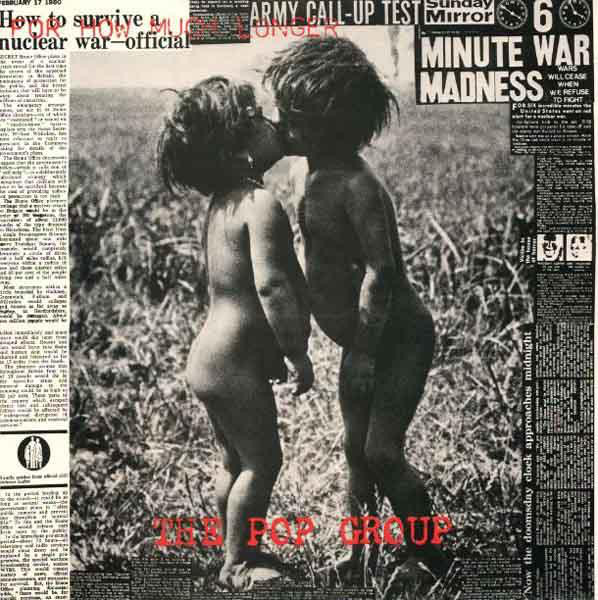
The cover of The Pop Group's How Much Longer Do We Tolerate Mass Murder looks like a newspaper and it is indeed a document of its times, profiling Thatcher's England and the crisis in Northern Ireland. Upon the re-release of this risky, funky, jolting album Mark Stewart told Fact.com “Our stance is shared across the globe,” says Mark Stewart. “I just feel that millions are asking the same question. What gives the one per cent the right to disrupt, exploit and take vast amounts of cash from the chaos and smokescreens they create? Now in this time of proxy wars and false flag attacks, now more than ever I say, for how much longer do we tolerate mass murder?”


Friday, February 1, 2019

Hate Has Made You Blind


Stiff Little Fingers : State of Emergency


On February 2, 1979 Rough Trade Records released Inflammable Material, a debut album recorded in ten days by the Belfast punk band Stiff Little Fingers. Though released well after the year punk rock broke, the album ranks among the very best for its politically charged dispatches that deal with life in Northern Ireland during "The Troubles".


Taking their name from a song on the Vibrators' Pure Mania debut, Stiff Little Fingers  were originally a popular cover band. That's when journalist-turned-band manager Gordon Ogilvie convinced them to write their own material. Ogilvie contributed lyrics to songs like the first single "Suspect Device", the anti-racist "White Noise" and "Barbed Wire Love". I've already written about "Alternative Ulster", the second single. 


On the online collaborative metadata database site Rate Your Music, one fan of the album ( who goes by the name Jeeeesus)  writes that while Ireland's Undertones gave us romantic pop and Van Morrison ignored the trouble back home, Stiff Little Fingers declared war on the so-called security forces:

Inflammable Material takes so few prisoners over its blazing 35 minutes that the Ulsterman's traditional pursuit of discreetly figuring out the background of everyone with whom he communicates becomes impossible. "Suspect device" is its first track and crown jewel, a storm of protest against the self-appointed community guardians who take away our freedom in the name of liberty. (Singer) Jake Burns's warning shot as the chorus detonates underpins the whole album: Don't believe them, don't believe them. Don't be bitten twice. This is an instruction, repeated elsewhere on the album, by a young man living in Belfast to tell the sociopathic footmen of a paramilitary organization where to stick it. The people he walks among every day are their open or tacit supporters. For this to be the sole voice of reason in a country deserted or screwed over by everyone who should have been committed to its preservation is testament to both the infamy of the latter and the courage and intelligence of the band.


Not all of the album is a report from the front lines. "Barbed Wire Love" is a song about love and sex ("blasted by your booby-traps") in No Man's Love that comes with a surprising doo-wop interlude. "Rough Trade" is about getting cheated on a record deal ( and although the title name checks the band's label, they claim it isn't about THAT Rough Trade).  "Johnny Was" is a Bob Marley and the Wailers cover that runs over 8 minutes.


The album sold more than 100,000 copies and peaked at U.K #14, the first album on an independent record label to enter the UK Top Twenty. Stiff Little Fingers still tours and Jake Burns is still proud of the debut album, even though he wishes Stiff Little Fingers had more time to record it. He told Beatroute in 2018:

Even  by the time we got into making the second album, there were things on the first album I wanted to change. I would’ve liked to have had a bit more time to record it. You might think, ‘Yes, we could have played it better, we could have done this better, we could have done that better.’ But then it wouldn’t have been the album that it is.


Wednesday, October 17, 2018

Alter Your Native Ulster


Stiff Little Fingers : Alternative Ulster


On October 17, 1978 the Belfast punk rockers, Stiff Little Fingers, released "Alternative Ulster", their second single. The song offers Belfast youth a third choice between the republican and loyalist paramilitaries: punk rock. Irish journalist Henry McDonald recalls getting stopped by police with his punk rocker friends. After taking their names and addresses, and learning the friends came from all corners of the sectarian-divided city, they shook their heads in disbelief.

Many of those punks would go on to become politically active, helping to facilitate the reconciliation that would happen with the Good Friday agreement two decades later.