Showing posts with label Bob Marley and the Wailers. Show all posts

Tuesday, May 11, 2021

The Death of the Prince of Reggae


Bob Marley and The Wailers : Three Little Birds

On May 11, 1981, at half past noon, Bob Marley died in Cedars of Lebanon hospital in Miami. He'd been secretly battling cancer for nearly a year when he was first admitted to New York hospital, supposedly suffering from exhaustion. In truth, he had a form of skin cancer that had spread from under the nail of a toe. His faith would not allow him to amputate the toe, which might have saved his life. Instead, he tried some experimental treatments in Germany, never chemotherapy,  hoping to fight off what was now lung and brain cancer.

"He could hardly walk and the brain problem affected the coordinated movement of his legs, " his wife Rita had said a month earlier.


In a cover story, Record World wrote:

 "Almost by himself, he brought reggae out of the ghetto, from a simple form of R&B to a true international force, backed by the power of the Rastafarian faith...He was the black prince, a bearer of peace and love and unity, and his tragically early death at the age of 36 has robbed the world whose life work was far from complete." 


Saturday, November 14, 2020

The most profound song in Bob Marley's catlogue


Bob Marley and the Wailers : Redemption Song


In November of 1980 Bob Marley released "Redemption Song", perhaps the most profound song in the entire Marley catalogue. It's inspired by a speech Black nationalist Marcus Garvey made entitled "The Work That Has Been Done", directly quoting some of the speech "We are going to emancipate ourselves from mental slavery because whilst others might free the body, none but ourselves can free the mind."

 Neville Garrick, who created the artwork on many Bob Marley and the Wailers albums, including 1980's Uprising,  told Bob Marley: The Untold Story  biographer Chris Salewicz

 "One of the most celebrated things Marcus Garvey ever said was 'Uplift ye mighty race: you can accomplish what you will. To me, 'Redemption Song' is an update of that: it really lives with you ; you have to make the move; you have to free your mind first, before you can attain anything.


The single emerged as rumors of Marley's health made headlines. There was speculation that Marley had cancer but Marley's people said it was just exhaustion. Marley himself recorded a personal message sent out by Island Records to radio stations. In the message he said

 "You think anything can raas kill me? I understand that writers and people in the press are very interested and concerned about my health. I want to say thank you for your interest and I'll be alright and I'll be back on the road again in 1981 -really , performing for the fans we love. Beautiful, y'know it's Bob talking to ya, have no doubt. Seen? Good".

Marley died in May of 1981.

Wednesday, June 10, 2020

Uprising: the last studio album Bob Marley would release in his lifetime


Bob Marley and the Wailers : Could You Be Loved


On June 10, 1980 Bob Marley and the Wailers released Uprising, an album that bounced back and forth between  the joy of living and loving and the gloom of pessimism and dread. Sometimes the songs answer each other. "Real Situation" suggests "total destruction" in the only solution. But that's immediately followed by "Forever Loving Jah", where Marley sings of a  faith that "will cast away the fears forever".

The single "Could You Be Loved" is one of Marley's biggest hits. 


When Marley handed Uprising in, label exec Chris Blackwell felt something was missing. The next day Marley played him "Redemption Song", an acoustic number that encapsulates Marley's philosophy. Rolling Stone critic Chris Morris took note in his review:

Bob Marley leaves us with a stark testament: “Redemption Song,” which he sings solo, accompanied only by his acoustic guitar. As the artist performs this folk ballad (with its aching cry of “Won’t you help to sing, these songs of freedom/’Cause all I ever had, redemption songs,” so reminiscent of the young Bob Dylan), one feels a man reaching out and grappling with the dreadful possibilities of liberation and disaster. Such a tour de force, like much of Uprising, is as moving as it is deeply troubling.


From Robert Christgau a grade of A -. It's not clear whether this review occurred before or after Marley collapsed on a jog through Central Park in September and learned his cancer had spread to his brain. Marley had been given three weeks to live but the grim news was not made public.

Except for "Jamming," a title that sums up the period perfectly, nothing since his solo-with-band debut Natty Dread has had the instant-classic immediacy of two very different offerings here: the dancy pop shot "Could You Be Loved" and the spirit anthem "Redemption Song." "Real Situation" ("It seems like total destruction/ The only solution") and "We and Dem" (need dey say more?) are apocalyptic enough to scare the bejezus out of Babylonian well-wishers, "Coming in From the Cold" and "Forever Loving Jah" mellow enough to hold out hope. Pray for him. Pray for all of us.

Thursday, October 3, 2019

So Arm in Arms, with Arms


Bob Marley and the Wailers : Zimbabwe


On October 2, 1979 Bob Marley and the Wailers released Survival, an album noted for its militant message of pro-African solidarity which was a far cry from the easy slanking mood of the album that came before it, Kaya. The song "Zimbabwe" was recorded while then-Rhodesia was still in the midst of a a civil war that would lead to its independence. 


Not one song from Survival made it onto the Legend so you probably haven't heard them a million times.That said, it's an excellent album. Some Marley fans even say it's his best.


Among the tracks is "Ambush at Night" about the December 3, 1976 attack upon the Marley compound. Despite having bodyguards in place, the assassins broke into the home, hitting Marley with a bullet in his arm which would be there for the rest of his life. Rita Marley was grazed by a bullet to the head. Lewis was hit several times. Marley played the concert two days after the shooting, and although he would say he recognized at least one of the shooters he never told the police.

The lyrics include the lines "Ambush in the night /All guns aiming at me /Ambush in the night /They opened fire on me now/ Ambush in the night /Protected by his majesty" I wrote more about the incident on its 40th anniversary.


Friday, March 23, 2018

Willing And Able


Bob Marley and the Wailers : Is This Love


On March 23, 1978 Bob Marley and the Wailers released Kaya, a mellow collection of songs recorded in the same London sessions that yielded Exodus. Why was it called Kaya?

"Kaya means herb,"Marley explained to Ian McCann. "So Kaya is really dealing with togetherness and humanity and peace, (because) the things of peace travel through the earth now. Yes, Rastaman Vibration and Exodus were 'arder. This time we dealing with something softer".


After the 1976 assassination attempt, Marley had every excuse to tone the politics and focus on love and marijuana. But not every one bought the excuse. Lester Bangs, in a Rolling Stone review, was among the first to call Kaya a sell out:

This is quite possibly the blandest set of reggae music I have ever heard, including all the Engelbertisms of would-be crossover crooners like John Holt. It's pleasant enough if you just let it eddy along, but nothing on the ten cuts pulls you in like the hypnotic undertow of Burning Spear's Marcus Garvey, haunts like the best from The Harder They Come soundtrack or churns up the guts and heart like Toots and the Maytals. Musically, Kaya is a succession of the most tepid reggae clichés, pristinely performed and recorded, every last bit of tourist bait (down to the wood blocks) in place just like a Martin Denny record. Marley sings in a cheerful lilt light and bouncy enough for panty-hose commercials. Four hundred years? Concrete jungles? Burning and looting? Pass the Man Tan, Irma.


Robert Christgau was taken with the album, grading Kaya with an A- and writing 

If this is MOR, it's MOR like good Steely Dan--MOR with a difference. Marley has sung with more apparent passion, it's true, but never more subtly, and his control of the shift in conception that began with Exodus is now absolute. He hasn't abandoned his apocalyptic vision--just found a day-to-day context for it, that's all. 

I've always enjoyed the easy skanking vibe of Kaya, the perfect soundtrack to a misty morning.


Thursday, November 9, 2017

New Wave


Bob Marley and the Wailers : Punky Reggae Party


In this November 1977 release, Bob Marley name checked The Clash, The Damned , The Jam and Dr Feelgood on the B side to his hit "Jamming". "Punky Reggae Party" was produced by Lee "Scratch" Perry.


(Marley) saw the importance of the punk movement. When the Clash played their White Riot tour dates at London’s Rainbow Theatre, Bob Marley stood in the wings, watching. With Lee Perry producing, and Aswad, a young London reggae group, as backing musicians, that summer Bob recorded ‘Punky Reggae Party’; this became the definitive celebration of the punk-reggae fusion that was taking place in 1977, the year when the two sevens clashed – ‘Two Sevens Clash’ was the title of a big-selling Jamaican hit by the vocal trio Culture, in which they celebrated in song this pivotal time of change, long predicted by numerologists.”

 Excerpt From: Chris Salewicz. “Bob Marley.”


Saturday, June 3, 2017

Jammin' Till The Jam Is Through


Bob Marley and the Wailers : Jamming


On June 3, 1977 Bob Marley and the Wailers released Exodus, Marley's first album since the 1976 assassination attempt. In fact, Marley had made a personal exodus, departing Jamaica for London where he recorded this album and enough material for Kaya, his 1978 follow-up.  


Side One is made up of political songs, though it might be stretching things to find a tune that directly addresses the assassination attempt. "The Heathern" does have the lyrics "He who live to fight and run away/Live to fight another day". 

The title track, a #1 hit in Jamaica, may very well be a response to Prime Minister Michael Manley campaign slogan "We know where we're going."  Marley sings"We know where we're from./We're leaving Babylon, y'all! /We're going to our Father's land".


But it is side two's devotion to love songs and Marley's classic "Jamming" that have made Exodus a fan favorite. "Waiting in Vain", "Turn Your Lights Down Low" and "Three Little Birds" are gorgeous songs. Add it all up and you have the album of the century Time Magazine declared in 1999.


Exodus was released during Marley's 1977 tour. Fans might have seen the "Tuff Gong"on stage wearing sandals and a bandage on his foot. Marley injured the foot playing soccer and doctors discovered he had skin cancer on a toe. Some doctors suggested the toe be removed, but Marley, who lived for soccer almost as much as he did for music, refused. Marley's skin cancer would spread leading to his death in 1981.

Saturday, December 3, 2016

Dem come fe kill Bob!


On the night of December 3, 1976 at least three assassins stormed Bob Marley's Kingston, Jamaica home firing automatic weapons . Bullets struck Marley, his wife Rita and his manager Don Taylor. To this day the identity of the gunmen and their motives are a mystery.

 What is known is that Marley wanted nothing to do with the politics that had sent the island nation on the brink of civil war. Marley said "Every law is illegal. Every government of the face of the earth is illegal. Only Jaa Law should be followed."


Marley did not trust politicians and one would soon remind him why. The superstar wanted to play a free concert for his countrymen and had to negotiate the venue with the unpopular Prime Minister Michael Manley who was up for election. When they settled on National Heroes Park, the National stadium, Manley announced the election would be held just days after he'd appear onstage with Marley. The appearance was that Marley would seem to be endorsing Manley. That angered Marley but outraged the Jamaican Labor Party faithful.

 There were death threats. And despite having bodyguards in place, the assassins broke into the home, hitting Marley with a bullet in his arm which would be there for the rest of his life. Rita Marley was grazed by a bullet to the head. Lewis was hit several times. Marley played the concert two days after the shooting, and although he would say he recognized at least one of the shooters he never told the police.

 If you're looking for a song that might be a reflection on that night you probably need to go to his Survival album and the track "Ambush in the Night":

Ambush in the night
All guns aiming at me
Ambush in the night
They opened fire on me now
Ambush in the night
Protected by his majesty

Saturday, April 30, 2016

40 Year Itch : Make Way for the Positive Day


   On April 30, 1976 Bob Marley and the Wailers released Rastaman Vibration, the first of Marley's albums to reach the Top 10 in the Billboard 200 chart where it peaked at number 8, thanks in large part to the success of the album's US #51 single "Roots, Rock, Reggae".


   It's always seemed odd to me that the album doesn't share the critical praise of the preceding albums Natty Dread and Live or the ones that immediately followed, Exodus and Kaya. That might be because this is the first Wailers album I ever owned, a cassette I found in a storage attic at my boarding school. The moment I first heard the crystal clear production, the synthesizers and the positive vibes of its opening cut, I was hooked. Rastaman Vibration was my introduction to reggae music and remains one of my ten desert island albums.


  I've only recently learned that the wisdom of the lyrics I've been hearing in "War" comes from a speech by Ethiopian emperor Haile Salassie, believed by many Rastafarians to be the reincarnation of Jesus Christ.

Until the philosophy which hold one race superior
And another
Inferior
Is finally
And permanently
Discredited
And abandoned
Everywhere is war
Me say war.
 That until there no longer
First class and second class citizens of any nation
Until the colour of a man's skin
Is of no more significance than the colour of his eyes -
Me say war.


  Not one of these album tracks appears on the best selling greatest hits collection, Legend. I envy every music fan that hasn't heard Rastaman Vibrationan album to be savored in its entirety. 

Sunday, June 21, 2015

40 Year Itch : Bob Marley And The Wailers Play NYC


   On June 21, 1975 Bob Marley and the Wailers brought their Natty Dread tour to The Manhattan Center in New York City. While the audio featured on YouTube leaves much to be desired, the video has been called the highest quality footage of a Marley performance in existence. 2500 people paid $6 to see The Wailers perform 17 songs including all of the tunes that would appear on the masterful Bob Marley and the Wailers Live album released later in the year. Three days earlier, 15-thousand people saw The Wailers perform at Central Park with Peter Frampton, The Bee Gees and Barry Manilow among others.


     Meanwhile, on the other side of the Atlantic, Elton John performed before 80,000 fans at Wembley Stadium with The Beach Boys, The Eagles, Joe Walsh, Rufus and Stackridge.

Thursday, March 26, 2015

40 Year Itch : Funky Kingston


  "Funky Kingston" is the title cut from a brilliant Toots and the Maytals collection that became a critical success ( #11 on the 1975 Village Voice poll and #378 on the Rolling Stone list of the 500 Greatest albums of All Time) and minor US hit in 1975. 


  One of Kingston's funkiest moments happened on March 8, 1975. The Jackson 5 opened for Bob Marley and the Wailers at an epic six hour concert at Kingston's National Arena. While on their visit to Jamaica, Michael and his brothers hung out with Marley and his band.


Both were big stars of course. But they would become worldwide sensations in the years to come.


Sunday, December 28, 2014

My 40 Fave Albums of 1974


1. Big Star Radio City
2. The Meters Rejuvenation
3. Brian Eno Taking Tiger Mountain ( By Strategy)


4. Bob Marley and the Wailers Natty Dread
5. Randy Newman Good Old Boys
6. Average White Band AWB


7.  Gene Clark No Other
8. Electric Light Orchestra Eldorado
9. Al Green Explores Your Mind


10. Sparks Kimono My House
11. Genesis The Lamb Lies Down on Broadway


12. Roxy Music Country Life
13. Joni Mitchell Court and Spark
14. 10cc Sheet Music


15. Jackson Browne For Everyman
16. James Brown The Payback


17. Queen Sheer Heart Attack
18. Neil Young On the Beach
19. The Who Odds and Sods


20. Robert Wyatt Rock Bottom
22. The Sharks Jab It In Eye


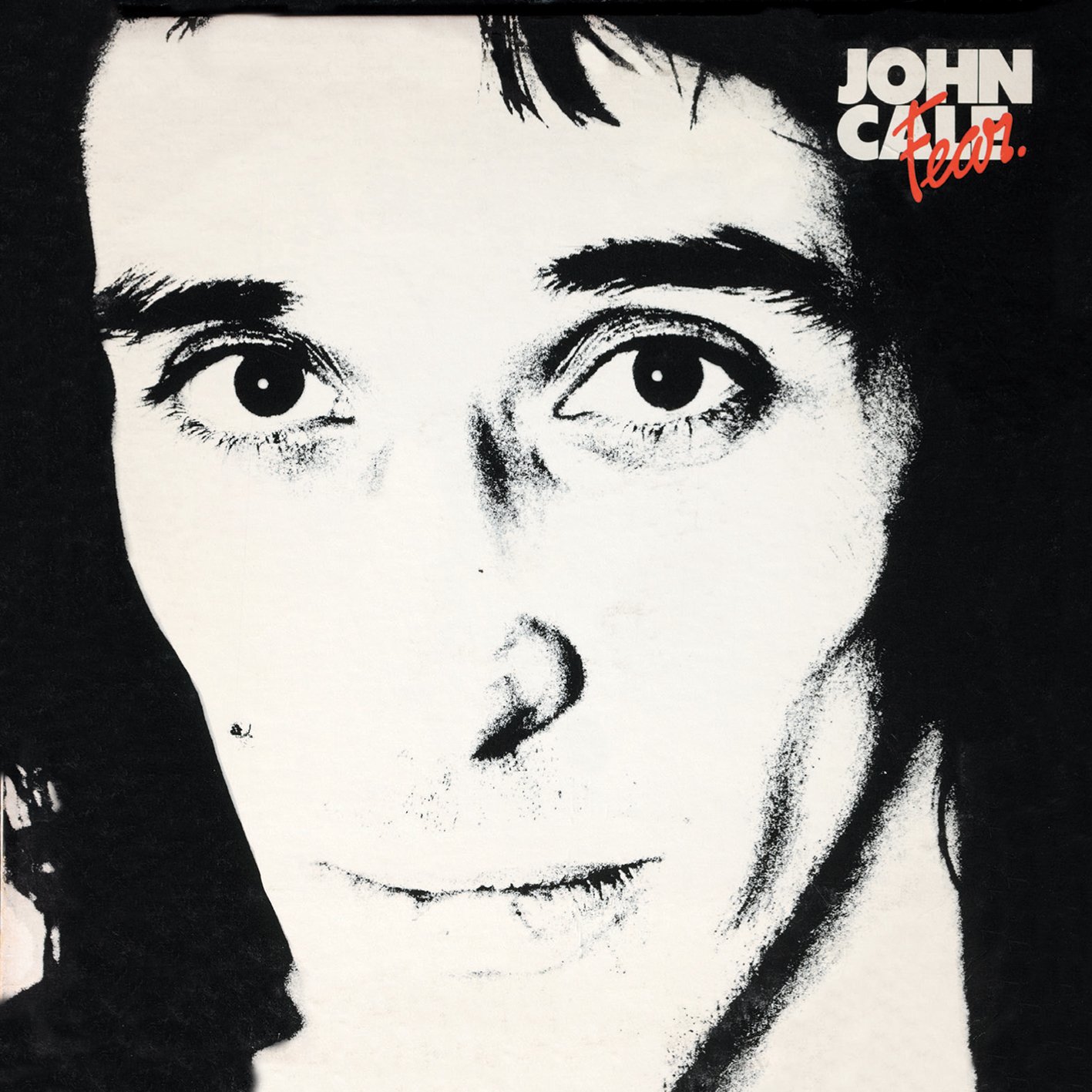
22. John Cale Fear
23. Andy Fairweather Low Spider Jiving
24. Blue Oyster Cult Secret Treaties


25. Ry Cooder Paradise and Lunch
26. Steely Dan Pretzel Logic
27. Brinsley Schwarz New Favourites


28. Badfinger Wish You Were Here
29. King Crimson Red
30. Roxy Music Stranded


31.  Bob Dylan and the Band Before the Flood
32.  Van Morrison Its Too Late to Stop Now
33. Stevie Wonder Fulfillingess' First Finale
34. The New York Dolls Too Much Too Soon


35. Eric Clapton 461 Ocean Boulevard
36. I Want to See the Bright Lights Tonight
37. Raspberries Starting Over


38. Gil Scott Heron and Brian Jackson Winter in America
39. Minnie Riperton Perfect Angel


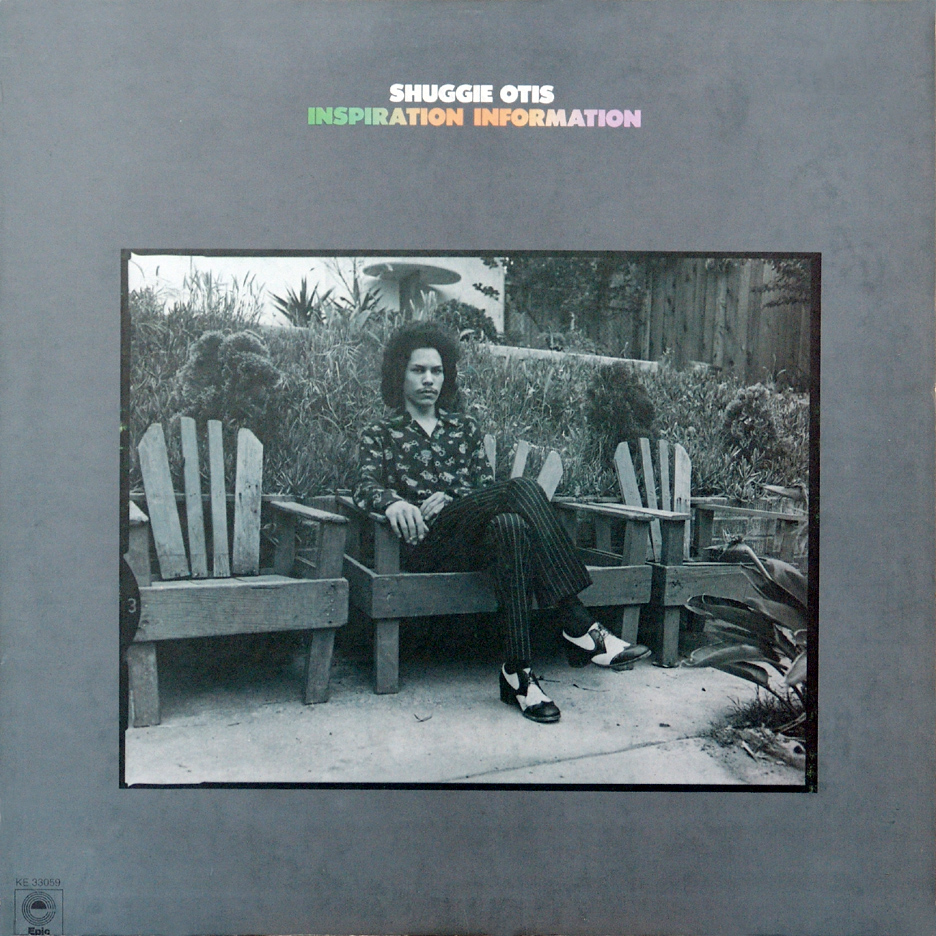
40. Shuggie Otis Inspiration Information

Saturday, October 25, 2014

40 Year Itch: Dreadlock Congo Bongo I


   On October 25, 1974 Bob Marley and the Wailers released Natty Dread. This was the first album by Marley since the original Wailers broke up. Their final concerts in England were met with poor attendance and Peter Tosh and Marley came to blows during one argument. ( It has been written that Tosh referred to the bi-racial Marley as a "white man's son"). They played one more gig together, opening for Marvin Gaye at Jamaica's Carib Club in May of 1974. After that both Tosh and Bunny Wailer set off on solo careers.


     Tony Wright, who did the cover art of Traffic's best albums, captured the new Wailers perfectly with his airbrushed portrait of Marley. Natty Dread's cover seems to say Bob Marley IS The Wailers. 


   To make up for the lost harmonies of Bunny and Tosh, Bob Marley is joined by the I-Threes, a vocal trio made up of his wife Rita, Marcia Griffiths and Judy Mowatt. Their contributions , especially on  "Them Belly Full",, "Bend Down Low" and "Rebel Music (3 O'Clock Roadblock)",  are what give Natty Dread that classic sound to these ears.


   The studio version of "No Woman No Cry" doesn't hold up to the Live! version that came out a year later and the album loses some steam on Side Two. But Natty Dread is a great album.


   Recorded at Harry J's studio in Kingston and mixed in London, Natty Dread was also Marley's breakthrough album. Some of the credit may have to go to Eric Clapton who made Marley's "I Shot the Sheriff" a worldwide hit ( and even to Barbra Streisand for her cover of "Guava Jelly" on ButterFly)


   Co-producer Chris Blackwell, who mis-named an album that was supposed to be called Knotty Dread, has nothing but praise for Marley :

   The first two records Catch a Fire and Burnin' didn't do too well in Jamaica, but Natty Dread was a hit there and outside. Natty Dread was a killer record. It really delivered the goods. But it was a very different sound from the first two , with Peter and Bunny's harmonies...Natty Dread got everybody talking, and then Catch a Fire and Burnin' start to sell like never before, because it was Natty Dread that made these records popular.


      At the time of the Natty Dread's release, Bob Marley was not the most popular performer in Jamaica. That distinction belonged to Jimmy Cliff, U-Roy or  possibly Marley's rival Peter Tosh. Missing two out of the three co-founders of his band, Marley had a lot to prove and he delivered a home run that would forever make him the King of reggae royalty.


Friday, July 19, 2013

40 Year Itch : Wake Up & Turn I Loose


[Purchase]


   Following shortly on the heels of the 1973 Island Records release Catch A Fire, Trojan Records put out African Herbsman, a collection of  recordings by Bob Marley and the Wailers most of which were produced as far back as the 1960s by Lee Perry. In Jamaica they were released in 1971 as Soul Revolution.


Among the tunes that would be re recorded for future Island releases: "Lively Up Yourself" ( Natty Dread). "Duppy Conqueror" (Burnin) and "Sun is Shining" ( Kaya). Not just the hipster fans claim the original, less dynamically produced Wailers is the superior stuff.

Billboard Magazine interviewed Marley for a November 1973 article that begins in a way that shows the author, Leroy Robinson, is not overwhelmed.:

The fact that reggae music has not been able to "Catch A Fire" (on Island Records) as the title of the Wailers' recent album suggests cannot be blamed on the Kingston, Jamaica group, headed by Bob Marley, for they have literally been steaming for ten years.


Marley is clearly in the position of selling this little known form of music to the America.

"I think as soon as the people in America find out what the real Reggae is, it will be around for a long long while."

He says Reggae is "mostly out of own living, our ghetto, our own oppressions. It's the kind of thing that really tears your heart open. The Jamaican man grows up with Reggae.It's our blues...Yeah, man it's a black people's music. But I prefer all people to like our music."

That day would soon come.

Monday, April 15, 2013

40 Year Itch: No Sun Will Shine In My Day


In retrospect, Chris Blackwell's bet on Bob Marley and the Wailers looks like the best $6000 ever placed. Catch A Fire, released April 13, 1973 in its now iconic zippo-shaped record cover, drew rave reviews and set off reggae's greatest band on the track to super-stardom. 


Not that Blackwell didn't hedge his bets.

After paying for the stranded Wailers ( which then also included future stars Peter Tosh and Bunny Livingstone) to fly home and record Catch A Fire  in Jamaica, Blackwell sweetened the master tapes with input from uncredited American session players like guitarist Wayne Perkins (who would play on the Rolling Stones Black and Blue album and contributes solos and guitar lines on "Concrete Jungle", "Stir It Up" and "Baby, We've Got a Date") and Texan Rabbit Bundrick ( who also played keyboards on The Rocky Horror Picture Show soundtrack). The first ten seconds of "Concrete Jungle" ( and therefore of the album) sound like any number of prog rock acts.


     Like most Wailers albums, there's a good mixture of love songs ("Stir It Up", Baby We've Got A Date") and political songs ("Concrete Jungle", "Slave Driver", Peter Tosh's "400 Years") that will dispel any notions of Jamaica being a vacation paradise.

   Catch A Fire is now considered one of the greatest reggae albums ever made. But the live shows are what made the Wailers stars. The Wailers would make one more record (Burnin')  before Peter Tosh and Bunny Livingstone left. All would be great forces in making reggae one of the world's most popular forms of music.