In November of 1980, The Fleshtones, garage-rockers out of NYC, released Up-Front, a five song EP on IRS Records. There's a surf instrumental and a high intensity version of the Stones' "Play With Fire". Owing a bit of their schtick to Sam the Sham and the Pharaohs, The Fleshtones, led by Peter Zaremba, had already established themselves as a great party band. And by signing to IRS, they earned a spot in the Urgh! A Music War documentary.
Six years later our paths would cross in New Orleans when I worked on The Cutting Edge. That story, which includes cameos by Alex Chilton and Mitch Easter, can be found here.
On November 17, 1980 John Lennon and Yoko Ono released Double Fantasy. It was Lennon's first album in five years where he played stay at-home dad with Sean and spent time separated from Ono. Had Lennon not been murdered weeks later, its legacy as a "heart play" might have been very different: an honest look at a relationship between two strong personalities, one living in fantasy ; the other more of a realist.
"Well, I know I hurt you then," sings Lennon on "I'm Losing You". "But hell, that was way back when/ Well, do you still have to carry that cross?"
"I'm moving on, moving on you're getting phony," responds Ono.
40 years later, it's Yoko's music that thrills me more. There's too much polish, too much studio craftsmanship, in the Lennon songs.
The immediate reviews of the album were not necessarily kind.
Charles Shaar, writing for NME, memorably said Double Fantasy "sounds like a great life, but it makes for a lousy record. ... I wish Lennon had kept his big happy trap shut until he had something to say that was even vaguely relevant to those of us not married to Yoko."
David Hepworth of Smash Hits was also brutal.
More negative reviews were withheld following the murder, including those for Rolling Stone and The New York Times.
My dad was one of the millions who bought Double Fantasy after the murder. He was writing a novel about the dissolution of a marriage at the time and I think he found wisdom in the lyrics, especially Yoko's. Some of her biting lines sound like something his next wife was already saying. (The food is cold/ Your eyes are cold/ The window's cold /The bed is cold). He honestly wanted to make a go of this upcoming third marriage but it wouldn't last.
Double Fantasy is more than a memento. But, like Rumours and Shoot Out The Lights, an honest dialogue with universal appeal. As Sean Lennon said "“I feel like Double Fantasy would have been the beginning of a whole new style of records for him."
On November 17, 1980 The Fall released their third album , Grotesque (After the Gramme). Mark E. Smith yelps and drawls in his own peculiar tone-deaf style over ragged, lo-fi, two chord riffs that Smith described as "Country and Northern."
Some of the songs, like "C'n'C's Mithering" and "The N.W.R.A.", ramble on for seven + moments while Smith takes on subjects like the music business, amphetamines, middle class liberals and on the final track (The North Will Rise Again), the rise of Northern England.
Smith wrote about the Fall's album in his memoir Renegade:
Grotesque is a very English album. It’s written from the inside, from experience; the real thing. Pub men can tell you a lot about the English way. But it’s tricky, because it wasn’t a defence either. It wasn’t some sort of kitchen-sink apology; or even one of those crap salt-of-the-earth things, where the working class are delighted with their lot, trudging around potless and pissed.
I don’t really write from a solid idea. It’s never that certain at the start. You get to what you’re saying through the writing, the process; and then you move on.
But the place for Grotesque certainly wasn’t indie music.
Even though it wasn’t respected at the time, it won us a groundswell of support. That was the great thing about it. People of a certain age, say twenty-five and upwards, said that it was their record, they related to it – not people in groups who heard it as nothing more than a naff LP recorded by a bunch of pony musicians, and certainly not the critics. But the most telling aspect of that period was the fact that I realized there’s a lot of ambitious people in this country without the talent. It’s a disease.
On November 15, 1980 Blondie topped the UK charts for the third time that year with their cover of The Paragons' virtually unknown 1967 single "The Tide Is High". It would also be the third Blondie single ( following 1979's "Heart of Glass" and 1980's "Call Me" ) to also top the US charts.
Brilliantly produced by Mike Chapman and sung by Deborah Harry, the song does have its fans. But there were already some people wondering why America's most successful power pop band was playing reggae and what did this mean for the forthcoming album Autoamerican.
Here's the original version.
.
The flip side, "Suzy and Jeffrey", was written about a real life incident where a couple who were coming to the studio to deliver something wound up crashing their car into the building. I can imagine fans who pogo'd to the power pop sounds of Blondie taking some solace from this one.
In November of 1980 Bob Marley released "Redemption Song", perhaps the most profound song in the entire Marley catalogue. It's inspired by a speech Black nationalist Marcus Garvey made entitled "The Work That Has Been Done", directly quoting some of the speech "We are going to emancipate ourselves from mental slavery because whilst others might free the body, none but ourselves can free the mind."
Neville Garrick, who created the artwork on many Bob Marley and the Wailers albums, including 1980's Uprising, told Bob Marley: The Untold Story biographer Chris Salewicz
"One of the most celebrated things Marcus Garvey ever said was 'Uplift ye mighty race: you can accomplish what you will. To me, 'Redemption Song' is an update of that: it really lives with you ; you have to make the move; you have to free your mind first, before you can attain anything.
The single emerged as rumors of Marley's health made headlines. There was speculation that Marley had cancer but Marley's people said it was just exhaustion. Marley himself recorded a personal message sent out by Island Records to radio stations. In the message he said
"You think anything can raas kill me? I understand that writers and people in the press are very interested and concerned about my health. I want to say thank you for your interest and I'll be alright and I'll be back on the road again in 1981 -really , performing for the fans we love. Beautiful, y'know it's Bob talking to ya, have no doubt. Seen? Good".
The November 13, 1980 issue of Smash Hits featured an All Time Top Ten list from Pete Wylie of Wah! Heat. The band's new single, the cold war anthem "Seven Minutes To Midnight", had just entered the independent charts at #3. Alan Lewis of Sounds described the single as " a force nine gale of jangly, trebly guitar and anguished vocal as Pete Wylie and company rip through a performance which is so intense as to be physically exhausting (and I'm talking about the listener!) A great record! Talk about totally wired.."
Pete's list has some huge surprises in it for those who may have never followed Frank Sinatra's career down the alleyways of punk rock.
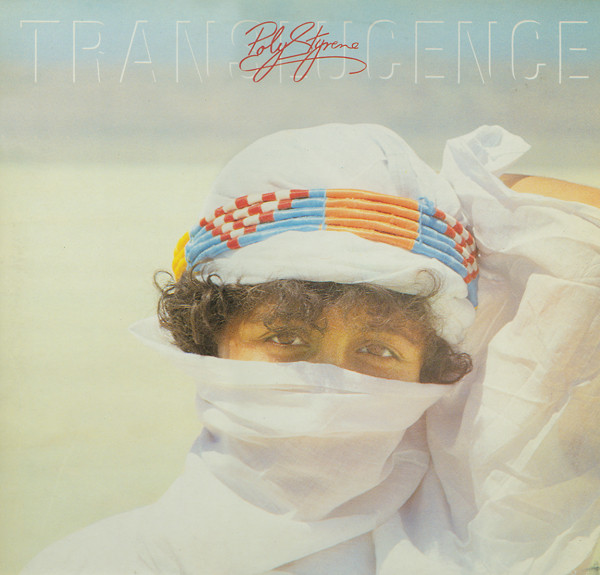
In November of 1980 Poly Styrene, one of the most outrageous voices of punk as the lead singer of X Ray Spex ("Some people think little girls should be seen and not heard
But I say...
Oh Bondage! Up yours!") released her debut solo album Translucence. It's a warm, airy album of easy listening tunes with a mellow tropical vibe. But the sunny sounds of the album hid the anxiety of the singer. ("dreamt that you were skating over ice/very cold and slippery but nice/woke up screaming in a nightmare/didn't you see the thin ice sign - beware")
The fanciful sound was just what the UK needed heading into the winter months and ,in its own way, it's a precursor to Tom Tom Club and Haircut 100. That said, not everyone was a fan of this surprising change of pace.
As CMJ put it
"It is quite likable and very palatable, but that's just what is more disturbing about it. It's as if Styrene awoke one morning thinking she had turned into Joni Mitchell. According to the artist, this is he real self. That's a damned shame."
Robert Christgau liked it quite a bit more, grading the album an A- and writing:
If the retarded tempos and professional musicians mean this isn't rock and roll, then what the fuck do you call the Shirelles? Speed and crudity aside, the pleasures here recall Germfree Adolescents--nursery-rhyme melodicism and tongue-in-cheek versifying superimposed on an image of provocative, charming plasticity. And if you believe that means she's "plastic," just what exactly is your beef? Are you a hippie or something?