Showing posts with label Aretha Franklin. Show all posts

Monday, December 23, 2019

The Worst Albums of 1979


Elton John : Victim of Love

[Purchase]

Victim of Love, Elton John's disco album, is the runaway winner as the worst album of 1979. In year two of his retirement from performing and writing songs with Bernie Taupin, a coked-up Elton John let disco producer Peter Bellotte handle the songwriting and the sessions. Elton didn't even play any of the instrumentation. 


The reviews were harsh including this one in Rolling Stone.


In his very enjoyable memoir Me, which I'm currently reading , Elton concedes he made the album to fulfill an obligation to his American label:

Not everything on Victim of Love was terrible--if the title track had come on at Studio 54, I'd have danced to it--but making an album in bad faith like that is never a good idea. No matter how you do it, it somehow gets into the music: you can just tell it's not coming from an honest place.

OTHER MAJOR DISAPPOINTMENTS:
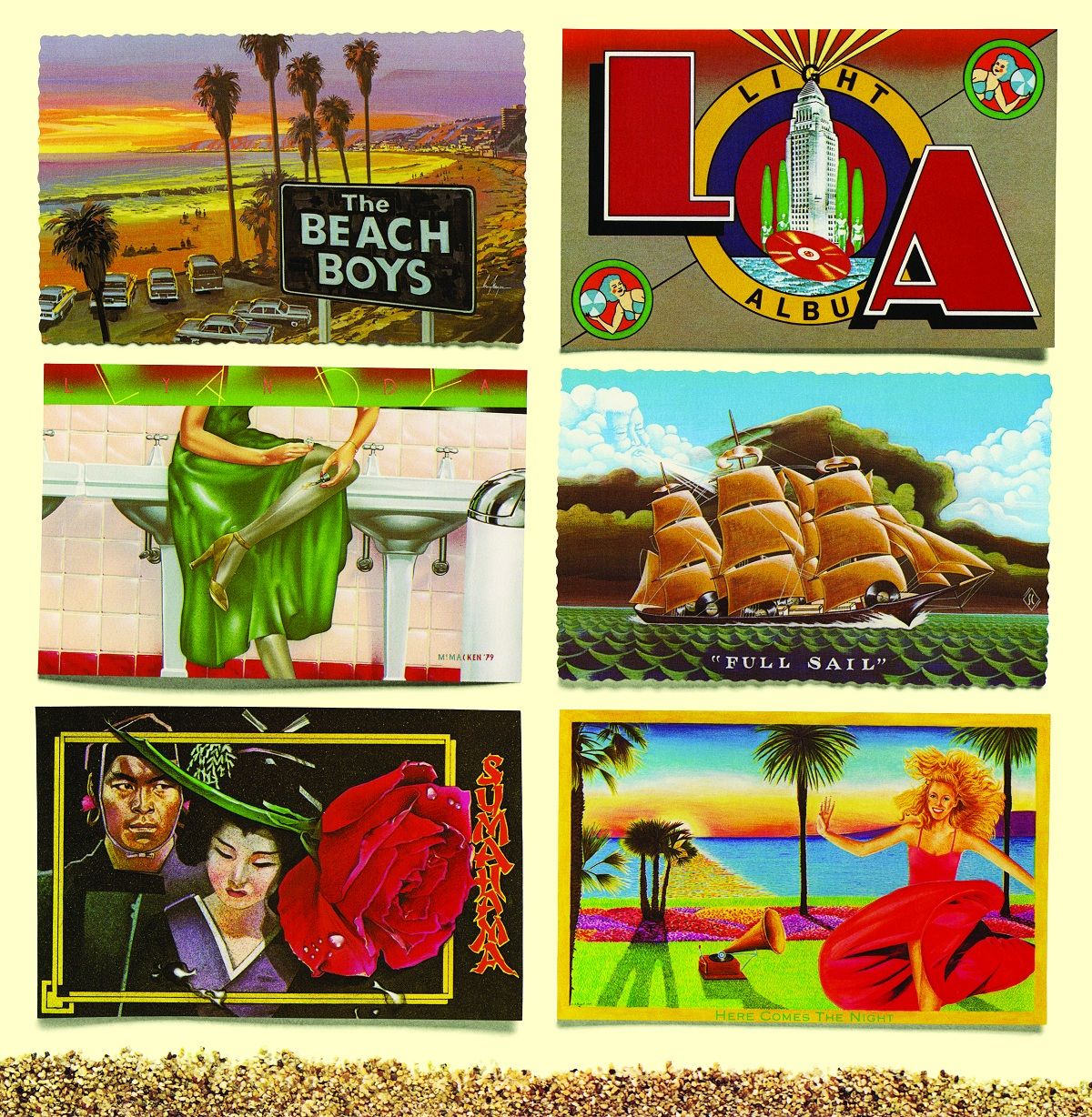

Beach Boys : Here Comes the Night

[Purchase]

The Beach Boys flirted with disco on L.A. (Light Album),  their first album for CBS Records. Rolling Stone critic Dave Marsh called it "worse than awful. It is irrelevant".  


Aretha Franklin :  Ladies Only

[Purchase]

In which the Queen of Soul gets blind-sided by the lights of the disco club. (Note the trend here?) Produced by Van McCoy, La Diva is the lowest charting and poorest selling album of Aretha's entire Atlantic Records catalogue.


Zon : Circus

[Purchase]

Alright here's an album that doesn't involve a well known band trying to make a disco record one year late. The Canadian rock group Zon was too busy trying to sounds like a mediocre version of Styx. So you can imagine...


Neil Diamond : I'm a Believer

[Purchase]

Tossed in this particular bin because of the reggae version of "I'm a Believer". Sacrilege! 


The Alan Parson Project : Damned If I Do

[Purchase]

I was a big fan of I Robot but Eve is horrible. Robert Christgau gave the album a grade of D writing: 

Musically, this is a step toward schlock that knows its name--a few smarmy melodies mixed in with the production values and synthesizer furbelows. Thematically, it's both sophomoric and disgusting--programmatic misogyny rooted in sexual rejections that were clearly deserved. Visually, it's sadistic--the three women on the Hipgnosis cover wear black veils that only partly conceal their scars, warts and blotches. What is it they stencil on street corners? Castrate art rockers?


More horrible disco albums:

Tina Turner's Love Explosion


Cher 's Take Me Home


And Various Artists Mickey Mouse Disco

Thursday, August 16, 2018

Amazing Aretha


Aretha Franklin : I Never Loved a Man ( The Way I Love You) (demo)


Spent the morning train ride listening to Aretha Franklin. I bought Aretha's Gold when I was 17 and have been a fan ever since. This demo version of "I Never Loved a Man ( The Way I Love You)", with Aretha on piano and accompanied only by a drummer, is one of the reasons she will always be the Queen of Soul.


Aretha Franklin was the daughter of a preacher. On Amazing Grace, she took us to her roots and showed us where that amazing voice came from - the church.“Being a singer is a natural gift. It means I'm using to the highest degree possible the gift that God gave me to use," she said. "I'm happy with that.”


 Aretha could make a song you've heard a million times sounds brand new. There will only be one Queen of Soul. As long as there is a planet Earth, we will be listening to her.

Monday, June 23, 2014

40 Year Itch : Stevie's Ladies


[Purchase]

   Just months after winning five Grammys, Stevie Wonder was lending his hit-making magic to the ladies in his life. Under the pseudonym El Toro Negro, Wonder produced Minnie Riperton's comeback album as well as her biggest hit "Lovin' You". The story is, with a song short of a full album, Wonder asked Minnie and husband Richard Rudolph for their most embarrassing song. Minnie immediately thought of the bedtime lullaby she sang to daughter Maya (Rudolph of SNL fame): the US #1 hit "Lovin' You". 


Perfect Angel offers more than sweet ballads showcasing Minnie's epic range. There are two Wonder-penned tunes ( "Perfect Angel", "Take a Little Trip"), a rocker (" Reasons") and a great Summertime jam called "Seeing You This Way".

.


[Purchase]

  Stevie Wonder gave away a sure-fire hit when he met LA funksters Rufus working on their second album.   He liked their recording of  "Maybe Your Baby" on the Rufus debut. Wonder first offered Rufus " Come and Get This Stuff" but Chaka Khan wasn't impressed. So Wonder offered " Tell Me Something Good", which he also produced. He had to convince Chaka Khan to sing the song in his key...which she did in one take. The result is a #3 hit.


   Watching the video, you'll see why Chaka Khan dominated the spotlight. That didn't necessarily sit well with the other members. Many left after the recording was finished. Too bad! Rags to Rufus has more going for it than the hit single. There's the Chaka penned "You Got the Love" and deep cut favorite  "Smokin' Room".


Wonder wrote "Until You Come Back To Me ( That's What I'm Gonna Do" in 1967 but handed it off to Aretha Franklin who hit #3 with the tune. 1974 wasn't much of a year for the Queen of Soul. For the first time ever, She failed to deliver an Atlantic album into the Top 40. On the bright side, Aretha shed 40 pounds thanks to a vinegar and honey diet and replaced her African robes with foxy outfits. 


Last but not least is the album Stevie Wonder produced for and with his ex-wife Syreeta Wright. Among the songs ( there's more smooth soul than funky butt soul here)  are three UK hits and "Come And Get Your Stuff, the tune Chaka Khan turned down. Side Two features an Abbey Road like medley. Because all of the songs were written--or co-written-- by Wonder, his biggest fans say this album, falling between Innervisions and Fulfillingness' First Finale.


Friday, July 12, 2013

40 Year Itch : Adventures in Soul


Two Great Artists Challenge Themselves and Their Fans

With his dazzling live album in 1972 and his partnership with Roberta Flack on the Grammy winning "Where Is the Love", the multi-talented Donny Hathaway had finally struck Gold. Now, to show his new fans what he was really capable of, Hathaway recorded his most ambitious set yet.

I decided to call it Extension of a Man because I am in the process of expanding and developing styles. I would like to record as many styles as humanly possible for one person.
-Donny Hathaway

The album's best known cut is the beautiful easy listening anthem "Someday We'll All Be Free" ( used in Spike Lee's Malcolm X). When Hathaway first heard the finished take of the tune he broke down in tears. The lyrics, by friend Edward Howard, were written not as an anthem but as a message to Hathaway:

 "What was going through my mind at the time was Donny, because Donny was a very troubled person. I hoped that at some point he would be released from all that he was going through. There was nothing I could do but write something that might be encouraging for him."


But there's also the symphonic opener "I Love the Lord; He Heard My Cry ( Parts I & II)" , a Tijuana Brass inspired "Flying Easy", a funky revisiting of  "The Ghetto" called "The Slums" and a Latin instrumental called "Valdez in the Country". Added up, it's a masterpiece from one of soul music's great visionaries. 

This would be Hathaway's final album. The man Curtis Mayfield described as "instilled with the depth of religious feeling in black music" was also suffering from paranoid schizophrenia. The year after his 1978 comeback duet with Flack, "The Closer I Get To You", Hathaway apparently leaped to his death from the 15th floor of New York City's Essex House.


I think we've found a winner for worst album cover of 1973.

Perhaps taking a cue from the progressive rock experimentalists , Aretha Franklin followed up her double live album of gospel music, Amazing Grace, with what initially was going to be a jazz vocal album, Hey Now Hey (The Other Side of the Sky). There's a straightforward take on Stephen Sondheim's "Somewhere" and a swinging rendition of James Moody's "Moody's Mood". Had producer Quincy Jones, record execs and Aretha herself not gotten cold feet, this might have a great, if underselling gamble. 


Instead they padded the album with filler and a song written by Aretha's sister Carolyn ( who sings background with Erma Franklin)  called "Angel" which hit #1 on the R and B charts and peaked at #20 on the pop charts. It was the first album Aretha recorded for Atlantic not to crack the Top 25 pop chart.

Quincy Jones also produced an astonishing Grammy winning single for Aretha in 1973 called "Master of Eyes ( The Deepness of Your Eyes)" which made it up to #33 on the pop charts but for some reason did not appear on Hey Now Hey.

Friday, June 22, 2012

40 Year Itch: Amazing Grace


[Purchase]

Aretha Franklin's best selling album of all time, released in June of 1972, remains her greatest achievement. She may have achieved worldwide fame with secular soul songs like "Respect" and "I Never Loved A Man ( The Way That I Love You)" but Aretha was first and foremost a preacher's daughter. Her father, The Rev. C.L. Franklin, had earned the nickname "The Million Dollar Voice" for his sermons at the New Bethel Baptist Church in Detroit.

On January 13, 1972 Aretha went back to church, in this case the New Temple Missionary Baptist Church in the Watts neighborhood of Los Angeles, to record what would become a double album with James Cleveland and The Southern California Community Choir. Aretha sang many of the songs she grew up with but also sang Marvin Gaye's "Wholy Holy" and Carole King's "You've Got a Friend" ( as part of a medley with "Precious Lord (Take My Hand)".


Some of those in attendance said the real powerhouse in church that day wasn't Aretha. It was the Spirit. Among those leaving the church inspired were Mick Jagger and Charlie Watts who were in LA finishing up Exile On Main St. They added gospel inflections to both "Let It Loose" and "Shine a Light" as a result.

Amazing Grace has sold two million copies so far.

Monday, January 23, 2012

Deep Cuts: Aretha Franklin - Border Song ( Holy Moses) 1972


Soul music may have no better A-side in 1972 than Aretha Franklin's Grammy Award winning Young Gifted and Black, released 40 years ago this week. Side One includes the US Top 5 pop song "Daydreaming" , the Top 10  "Rock Steady" ( featuring cowbell from Dr John), and the Nina Simone-penned title track. A five star album in the first two versions of Rolling Stone Record Guide, it may have fallen from favor because Franklin's improvisation exercises clearly inspired the histrionics we've all had to endure from the likes of Whitney Houston, Celine Dion and Mariah Carey.

The last track on the album takes the Elton John/Bernie Taupin song "Border Song" to church. The Sweet Inspirations- the same backing vocal group who sang on Aretha's Atlantic recordings-bhelp the Queen drench the tune in a gospel-soul. Then there's the exquisite guitar solo by the late Cornell DuPree. Finally, Aretha changes just one line, but to great effect, asking "Can we live in peace?" ( instead of "let us live in peace").


What a question for our times.

This was just part of Aretha's spiritual-journey-on-record that would lead , only six months later, to the masterpiece Amazing Grace, recorded with the Reverend James Cleveland and the Southern California Community Choir.


Wednesday, September 7, 2011

#41 Don Covay Mercy, Mercy 1964


Don Covay was the original "double threat". Not only could he sing, he could drive. Covay played chauffeur for Little Richard and sometimes opened for his idol. In return Little Richard produced Covay's debut single "Bip Bip Bip"  which sank like a stone in 1957
Fast forward to 1964 and Covay, finding success as a songwriter for Jerry Butler, Gladys Knight & the Pips and Wilson Pickett gets a young Jimi Hendrix to play guitar on a new record he wrote: "Mercy, Mercy". The single, a short soulful stew of blues, groove and sweat would hit #35 on the Billboard charts.
The Rolling Stones recorded a better known cover version on Out of Our Heads. It's interesting to hear the two versions side by side. If Mick Jagger hasn't transformed himself into Covay,  he sure as hell seemed to be trying his best to make it happen.
Covay also wrote the #44 pop hit "See Saw" and "Chain of Fools" both covered by Aretha Franklin. In 1969, Covay and the Jefferson Lemon Blues Band recorded a brilliant blues-rock album called House of Blue Light. For more on that amazing album, check out this excellent review on The Rising Storm . Despite a debilitating stroke, Don Covay, mercifully,  is still with us.